

Find Cheap Ammo Without Sacrificing Quality: Smart Ways to Save on Every Box
You’re at the range, blasting through target after target, and your wallet isn’t crying—that’s the magic of cheap ammo. It’s simply factory-new or remanufactured rounds that get the job done for practice without the premium price tag of defensive or match-grade loads. Because it uses basic brass, standard primers, and bulk projectiles, it cycles reliably in most guns while letting you fire twice as much for the same cash. Grab it by the case for plinking or drills, and you’ll build muscle memory without worrying about burning through your savings.
Why Affordable Ammunition Doesn’t Mean Low Quality
Cheap ammo often earns its price through leaner marketing and bulk manufacturing, not by cutting corners on the brass or powder that matters. I’ve fed thousands of rounds of budget-friendly 9mm through my 6.8 SPC Ammo for Sale carry gun, and it cycles just as reliably as the premium stuff—because the core recipe, like pressure-tested primers and consistent case dimensions, stays identical. The savings come from skipping fancy packaging or flashy headstamps, not from skimping on the projectile’s weight or seating depth. Affordable ammunition proves its value at the range, where group sizes tighten not because of price but because of consistent lot-to-lot production. That said, your specific firearm’s feed ramp can still be picky, so a cheap box that runs flawlessly in a friend’s pistol might hiccup in yours. Buy a single box, test a hundred rounds, and then trust that budget brand for practice—because reliability is earned through repetition, not dollars spent.
What Actually Determines the Price Tag on Budget Rounds
What actually determines the price tag on budget rounds is the cost of raw materials and manufacturing shortcuts, not ballistic performance. Cheap ammo pricing hinges on factors like using berdan primers instead of boxer primers, which reduces production steps, and employing less precise case-trimming tolerances that save machine time. Bulk-extruded propellant, rather than premium spherical powders, also cuts expense significantly. Even the absence of nickel-plating on casings or crimped-in projectiles versus staked ones lowers per-unit costs. These choices affect reloadability or consistency, but they do not degrade the cartridge’s core pressure or velocity. Essentially, the price tag reflects how many corners were cut in *production efficiency*, not the quality of the explosion you get.

What determines the price tag on budget rounds is purely manufacturing efficiency—primer type, powder grade, and casing finishing—not the round’s fundamental safety or accuracy.
Where Manufacturers Cut Costs Without Cutting Corners on Performance
To keep rounds affordable, manufacturers focus on load consistency through simplified logistics, not material downgrades. They cut costs by using bulk-sourced brass with thicker walls, which sacrifices resizing convenience but preserves chamber pressure integrity. Projectiles often come from single-cavity molds with slightly rougher surfaces—this reduces precision at extreme ranges, yet maintains terminal performance at typical defensive distances. Primers are machine-inserted in high-volume runs, eliminating hand-inspection labor while still meeting flash-hole tolerances. The sequence is:
- Standardize powder charges across calibers to reduce mixing errors.
- Use annealed cases once, skipping the multi-use sorting process.
- Optimize crimp tension for feed reliability, not case life.
Each savings step targets production overhead, leaving the combustion and projectile dynamics intact for practical accuracy.
How to Spot the Best Value Bulk Ammo for Your Firearm
Spotting the best value bulk ammo starts with calculating cost per round, not just the sticker price—cheap ammo often hides higher shipping or hazmat fees. Check the bullet weight and velocity against your firearm’s manual; a bargain load that under-cycles your slide or keys inaccurately costs more in the long run. Inspect the casing material: brass reloads offer reliability, while steel-case cheap ammo is fine for plinking but harder on extractors. Look for sealed primers and crimped projectiles on surplus lots, as these indicate better storage stability. Read recent buyer reviews specifically about misfires and dud rates, not just overall satisfaction. Sometimes the cheapest box per round is the most expensive if you burn through twice as many confirming zero. Finally, buy from a reputable dealer with a return policy, and test a small sample before committing to a case. Track your actual shots fired .32 ACP Ammo for Sale versus malfunctions to judge true value.
Matching Cheap Cartridges to Your Gun’s Caliber and Purpose
Matching cheap cartridges to your gun’s caliber is non-negotiable, but the real value emerges when you align that caliber with your specific purpose. For range practice, a budget-friendly 9mm or .223 Remington in standard pressure offers reliable cycling without burning premium hunting loads. If you’re training for defensive use, choose the cheapest jacketed hollow point or flat-nose design that still feeds reliably in your pistol—not a round-nose target bullet that mimics different terminal behavior. Conversely, for hunting, cheap bulk ammo only makes sense if the projectile weight and construction match your game size; a light varmint bullet in .308 will fragment on a deer, wasting money and ethical shots. Always verify the cartridge’s velocity matches your barrel length—short barrels lose speed, so a cheap subsonic load may fail to expand or cycle. Prioritize https://specialtysportsandsupplyltd.com/ caliber-specific cheap ammo for your primary role, and you’ll cut costs without compromising safety or hit probability.
The cheapest cartridge is worthless if its caliber doesn’t fit your firearm or its load profile doesn’t serve your intended shooting task.
Full Metal Jacket vs. Hollow Points: Which Budget Option Fits Your Need

When comparing Full Metal Jacket vs. Hollow Points for budget bulk ammunition, your intended use dictates the clear winner. FMJ rounds are almost always the cheapest per round because their simple lead-core, copper-jacket construction is mass-produced for range training and plinking, making them ideal for high-volume practice where expansion is unnecessary. Hollow points, by contrast, cost significantly more due to the precision manufacturing required for consistent expansion, and that premium means you get fewer rounds per dollar. If you need defensive ammunition, you cannot compromise on hollow points for carry, but for bulk storage and drills, FMJ offers the lowest cost per trigger pull. For a truly tight budget, stick with FMJ for 90% of your shooting, and invest only a small quantity of hollow points for loading your self-defense magazines.
- FMJ jackets prevent lead fouling in barrels, which reduces cleaning time and maintenance costs over thousands of rounds.
- Hollow points are less reliable for cycling in older or low-end firearms that demand a full-profile round nose for feeding.
- Bulk FMJ boxes typically outnumber hollow point supply in stores, giving you more shelf-stable options for long-term stockpiling.
- Hollow point bullets are prone to nose deformation when stored loose in bulk cans, whereas FMJ retains its shape indefinitely.
Practical Ways to Save Money on Practice Rounds
To truly cut costs on practice rounds, stop buying premium defensive loads for every session—switch your primary training to cheap ammo like steel-cased or bulk FMJ rounds. Buy in bulk during sales, and split the case with a friend to slash per-box shipping.
Shooters often waste money by burning expensive hollow points on drills that don’t need them; reserve those for function checks, not volume.
Also, track your rounds: use cheap ammo for 90% of your reps, then run just one mag of carry ammo to confirm feeding. Finally, clean your gun less aggressively after shooting cheap ammo—it runs dirtier, but over-scrubbing wears parts faster, costing you more in the long run.
Buying in Bulk vs. Small Packs: The Real Per-Round Savings
When comparing bulk ammo pricing per round against small packs, the difference often exceeds ten cents per cartridge, especially for common calibers like 9mm or .223. A box of 20 might cost $14, while a 500-round case from the same lot could run $300, saving $0.10 per shot. However, you must factor in flat-rate shipping fees, which quickly dilute savings on a single 50-round box. Buying 1,000 rounds at once typically cuts per-round cost by 15–25% versus four separate 250-round purchases, but only if you actually shoot that volume before prices or your preferences change. Small packs make sense for testing a new load or firearm function; bulk only pays off when you reliably train through it.
Bulk buys cut per-round cost dramatically, but only if shipping is amortized and you consume the full case; small packs remain smarter for testing unfamiliar ammunition.
Using Reloaded or Remanufactured Rounds Safely and Effectively
To use remanufactured rounds safely and effectively, always inspect each casing for cracks, bulges, or corroded primer pockets before loading them into your magazine. Start with a small batch from a reputable remanufacturer, then fire them from a locked, rested position to check for pressure signs like flattened primers or difficult extraction. Chronograph a sample to confirm velocity consistency; wild swings indicate inconsistent powder charges, so discard that lot. For handloads, strictly follow published data, never exceed maximum charges, and resize all brass to spec. Clean and lubricate your firearm more frequently, as remanufactured ammo often leaves heavier carbon fouling. Rotate your practice stock, shooting the oldest rounds first to .35 Remington Ammo for Sale avoid moisture degradation.
Accuracy and Reliability: What to Expect from Low-Cost Loads
Low-cost ammunition typically delivers acceptable accuracy for close-range practice, but group sizes often open up significantly beyond 50 yards. Expect 2–4 inch variations at 100 yards from budget loads, compared to 1–1.5 inches from premium match rounds. Reliability is the stronger suit of cheap ammo, as most manufacturers use .338 Lapua Ammo for Sale consistent powder charges and primers, though occasional hard primers or light strikes do occur. Bullet weight and seating depth inconsistencies are the primary drivers of accuracy loss, not the brass or propellant quality itself. You can often improve performance by testing several boxes from the same lot before bulk-buying. For defensive or competitive use, verify function in your firearm first; otherwise, low-cost loads remain dependable for training, plinking, and zero confirmation at moderate distances.
How to Test a Cheap Lot for Consistent Grouping and Feeding
To test a cheap lot for consistent grouping and feeding, start by firing five consecutive five-shot groups at 50 yards, measuring each spread and noting flyers—this reveals if the lot holds a predictable pattern. Then, switch to your preferred magazine and cycle a full box manually, watching for nose-dives or bolt-over-base jams. For semi-autos, load one round, fire, then repeat with two—this isolates feeding hiccups from extractor issues. Track every malfunction on a sticky note taped to the ammo box. If two or more stoppages occur per 50 rounds, the lot is unreliable for defensive use, but still fine for plinking. Consistent grouping and feeding in cheap ammo hinges on this boring, repetitive drill—not on one lucky ragged hole.
Signs Your Budget Ammo Is Undersized, Overpressured, or Just Right
Your brass tells the truth about cheap ammo. If cases eject weakly or fail to cycle a slide reliably, you’re likely dealing with an **undersized budget load**—often undercharged or with sloppy case dimensions. Conversely, flattened primers, sticky extraction, or a noticeably sharper recoil .32 Win Special Ammo for Sale impulse signal overpressure, which can batter your firearm over time. When your budget ammo is *just right*, spent cases land in a consistent, predictable pile, primers stay rounded, and the gun runs boringly smooth. A quick visual check of fired brass after each box is your best diagnostic tool.
Signs your budget ammo is undersized, overpressured, or just right usually appear within the first magazine—trust what your gun and brass tell you.
Q: What is the fastest way to spot overpressure in cheap ammo?
A: Look for a flattened or cratered primer pocket on the spent casing; that’s a classic pressure warning sign.
However, a single odd case isn’t a verdict—watch for a pattern across 6.5x57R Ammo for Sale several rounds before you blame the lot.
Tips for Storing and Handling Discount Cartridges Longer
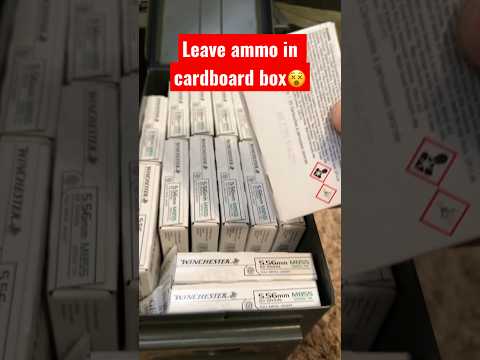
The cardboard box of bargain .300 Blackout arrived dusty, and I knew their reputation—cheap ammo demands better care than the premium stuff. First, decant those discount cartridges from bulk bags into sealed, desiccant-lined ammo cans; the flimsy packaging they ship in is the enemy. Moisture is the silent killer of budget brass, so avoid storing them in a humid garage or basement—a climate-controlled closet keeps primers and powder stable. Rotate your stock like groceries, placing newer discount cartridges behind older ones so you’re never firing decade-old rounds that may have degraded. Finally, handle them gently; the cheap lacquer on some steel cases can flake off if you toss them around, inviting rust. That simple routine turned my misfire-prone bargain stash into a reliable range companion.
Keeping Moisture and Heat from Ruining Your Stockpile
To keep your discount ammo viable, treat moisture as the primary enemy: store primers and powder in sealed, airtight ammo cans with a desiccant pack, swapping it out every few months. Heat accelerates propellant breakdown, so never leave stockpiles in a truck bed or direct sun; a cool, dark closet or basement shelf works better than a hot garage. Controlling humidity for cheap ammo means checking for corrosion on case mouths—if you see green residue, you waited too long. Allow cold rounds to slowly reach room temperature before opening their container, preventing condensation from forming on the brass. A simple hygrometer inside your storage bin gives you a factual baseline to act on before damage begins.
Moisture corrodes, heat degrades—seal airtight, cool dark, and monitor humidity to protect every 6.5x57mm Mauser Ammo for Sale cheap cartridge you bought.
Rotating Your Supply So Nothing Goes Stale in the Safe

Even with cheap ammo, always practice the “first in, first out” rule with your stash. When you buy a fresh batch of bargain rounds, physically push them to the back of your safe shelf and bring the older boxes to the front. This way, you grab the oldest stock first for your range trips, so nothing sits forgotten for years. Ammo doesn’t spoil like milk, but humidity and temperature swings can degrade primers and powder over a long period. By simply rotating your supply during each restock, you ensure every cartridge gets used while it’s still fresh, keeping your cheap ammo reliable and your safe 6.5×55 Swedish Ammo for Sale full of usable rounds. It takes seconds and saves you from frustrating duds later.
Common Mistakes to Avoid When Buying Bargain Rounds
The biggest mistake when buying bargain rounds is ignoring lot-to-lot consistency; a cheap box that grouped well last month may be a completely different, inaccurate load today. Always check the headstamp and, if possible, buy multiple boxes from the same batch for practice. Another error is skipping a function-check in your specific firearm—what runs flawlessly in a test gun can jam in your tight-chambered pistol, so fire a few rounds before committing to a bulk purchase. Do not sacrifice reliability for price, as a single squib load can damage your weapon and cost more than the savings. Finally, never stockpile a bargain round without verifying its actual ballistic performance for your needs, since “cheap” often means shorter brass life or harder primers. Q: Should you trust online reviews of bargain ammo? A: Only as a starting point, because your gun’s tolerances and your shooting style determine real-world safety.
Ignoring the Grain Weight: Why Lighter or Heavier Bullets Change Your Shots
Grab a bargain box of 115-grain 9mm when your pistol usually runs 147-grain, and you’ll see the point of impact drop and felt recoil snap harder, because the slide cycles faster with lighter mass. Conversely, switching to a heavier bullet for a Ammunition for Sale discount raises pressure curves and can cause stovepipes if your recoil spring is tuned for lighter loads. This grain weight mismatch shifts your zero due to different muzzle velocities and barrel dwell times, so you’re not just saving money—you’re re-sighting for every purchase. For cheap ammo, always verify bullet mass against your firearm’s manual; a 20-grain difference alters trajectory by several inches at 25 yards, turning a deal into a frustration.
Overbuying a Deal That Doesn’t Suit Your Shooting Sessions
A bargain only counts if it matches your actual routine. Overbuying unsuitable bargain ammunition locks you into thousands of rounds that punish your specific shooting sessions—for example, buying heavy 147-grain subsonic loads for a compact pistol you only use for fast target drills can cause weak slide cycling and frustrating malfunctions. If your sessions are 50-yard precision rimfire, snapping up bulk 40-grain high-velocity loads might open groups beyond acceptable limits. Before committing to a case, calculate your monthly round count and compare the deal’s bullet weight, velocity, and pressure against your firearm’s documented preferences. A low price per round becomes a trap when you must either force the ammo into wrong contexts or sell it at a loss. Session-specific fit matters more than the sticker price.